How to Maintain Your Vehicle’s Belts and Hoses
Regular oil and filter changes not only benefit your engine but also help extend the life of your vehicle’s belts and hoses. Fresh, clean engine oil helps condition the rubber seals in the engine, preventing them from drying out or cracking. Similarly, maintaining proper levels of transmission fluid, power steering fluid (where applicable), and other fluids ensures that these systems operate smoothly and don’t develop leaks. When fluids leak and drip onto belts, the combination of heat and friction can cause the belts to “glaze,” leading to slippage, reduced engine performance, or even engine failure. Routine maintenance, performed by a certified technician, can prevent leaks and keep your engine running efficiently for years to come.
What Happens When Belts and Hoses Wear Out?
Over time, hose fittings can loosen, leading to coolant leaks, and hoses themselves can deteriorate internally due to contaminants in the antifreeze. Belts, on the other hand, can stretch and wear out gradually. These issues often develop unnoticed, which is why it’s important to have your belts and hoses inspected regularly by a technician familiar with your vehicle’s make and model. Early detection of these problems can prevent breakdowns and costly repairs.
How Long Do Belts and Hoses Last?
High-quality belts and hoses can often last for the lifetime of your vehicle. However, Toyota recommends having the drive belts inspected at 60,000 miles and every 15,000 miles thereafter, as outlined in the 2015 Toyota RAV4 owner’s manual. For other Toyota models, refer to the maintenance guide in your owner’s manual or contact your local Toyota service center for specific recommendations tailored to your vehicle.
What Belts and Hoses Are in My Car?
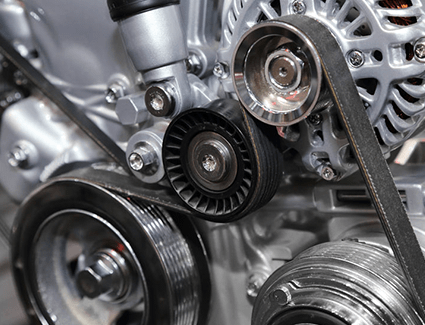
The configuration of belts and hoses varies depending on the vehicle and engine type. Most modern Toyotas feature a serpentine belt that powers multiple accessories, such as the alternator, water pump, and power steering pump. Some engines also have a timing belt, which synchronizes the engine’s internal components. Additionally, you’ll find brake lines, vacuum lines, and coolant hoses under the hood. In hybrid and electric Toyota models, some traditional belt-driven systems, like power steering, have been replaced with electric systems. Always consult your owner’s manual to understand the specific components in your vehicle.
By staying proactive with maintenance and inspections, you can ensure your belts and hoses remain in good condition, keeping your vehicle running smoothly and reliably.
 auto repair Kansas City